

Hajer Ben Boubaker, founder of the Vintage Arab podcast, on the significance of Merzak Allouache’s seminal film
Words
MIRIAM BOUTEBA
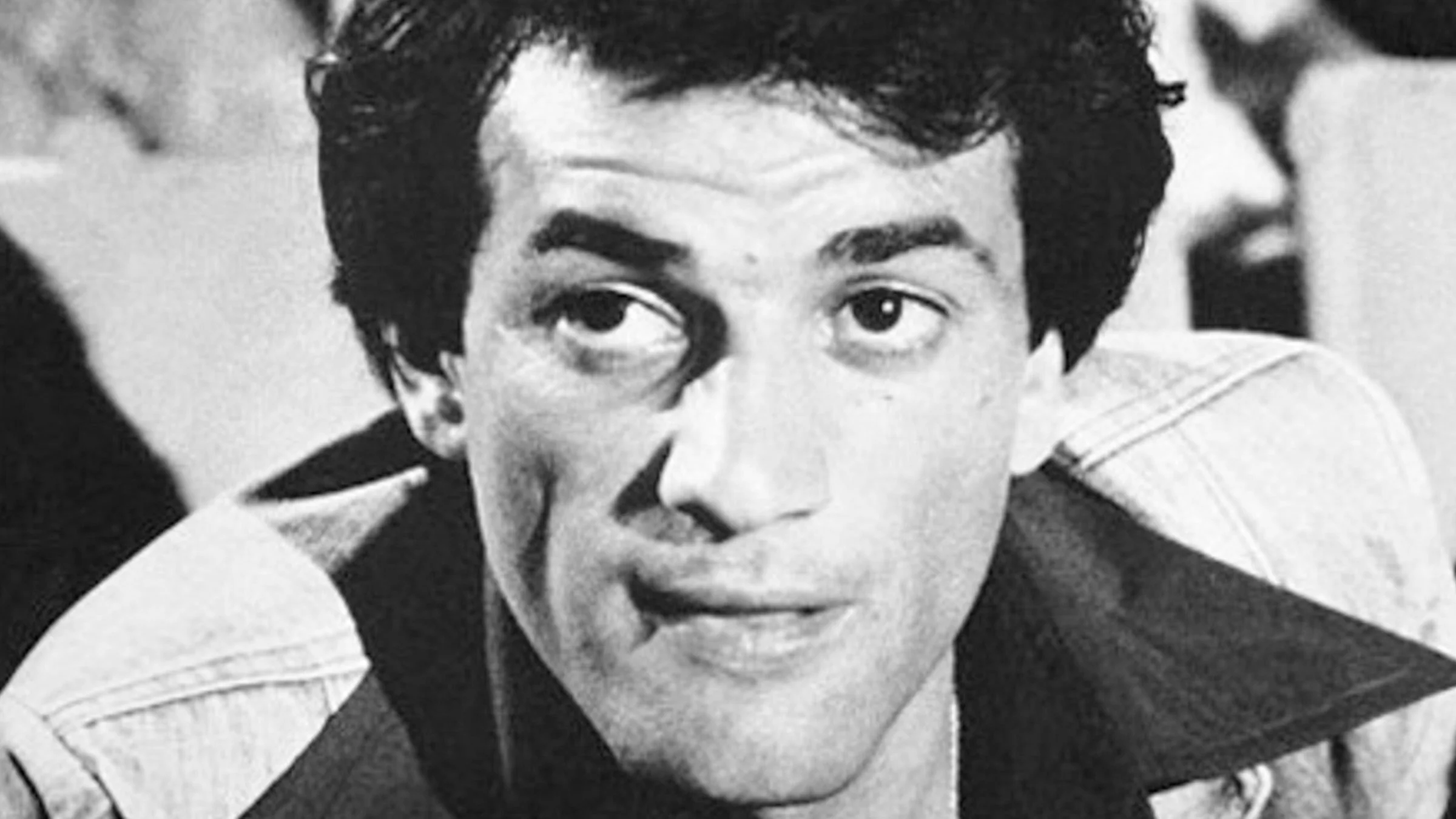
Scarred by the brutality of French occupation, and justifiably proud of the mujahadin forces who won the country’s war of independence (1954 – 1962), Algeria’s cultural output has often focussed on that period in its rich history. What makes Merzak Allouache’s 1976 filmOmar Gatlato so special is that it's not a reaction to this trauma and it's a story without a hero. Soundtracked by the beautifully mournful composition of Ahmed Malek, this romantic comedy is centred around a protagonist played by Boualem Bennani who, speaking straight to camera, falls into the perfect, exalted state of unrequited love. His life is normal, mundane even, as we see him at the cinema and drinking with friends. Nothing much really happens and yet that is why it’s such a vital work.
The importance and rarity of this cult piece of cinema cannot be underestimated. Its title has been borrowed for exhibition Waiting for Omar Gatlato and accompanying book Waiting for Omar Gatlato: A Survey of Contemporary Art from Algeria and Its Diaspora - curated and written respectively by Natasha Marie Llorens. Currently touring at La Friche in Marseille under its French title, En Attendant Omar Gatlato, the work of 29 artists from Algeria and its diaspora are on show – all of which are personal, focussed on the everyday and, crucially, completely removed from the national mythology. En Attendant Omar Gatlato is also the title of a 1979 book published by Algerian feminist writer and lawyer Wassyla Tamzali, which explores the ways in which Algerian conceptual film has dealt with the process of decolonisation.
Film here
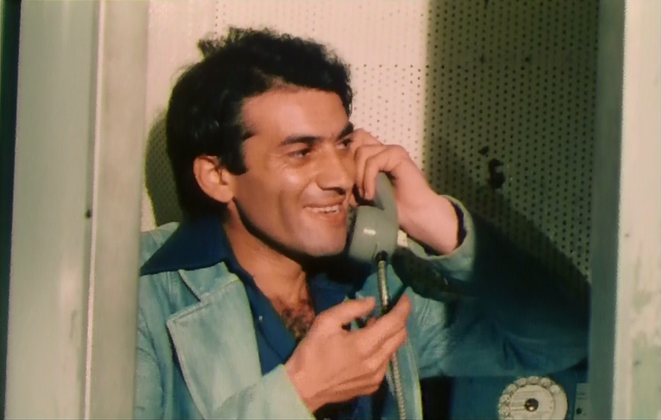
Hajer Ben Boubaker, Paris-based researcher and founder of the Vintage Arab podcast, explains the importance of the film, how it tackles romance in such a distinct way and why it’s still relevant today.
“Omar Gatlato is something of a precursor to the relationships that exist today, thanks to social media. We get attached to people we don't know, with whom we communicate only by message, or sometimes not at all – we are captivated by what they share. Omar Gatlatlo spoke about the mystery of this type of attraction as early as the 1970s.
The protagonist is an anti-hero who looks like a lot of other guys, who doesn't have an exceptional background and who doesn't even dare talk to the girl he likes. All this makes him very endearing. I remember the opening scene very well, the moment Omar Gatlato introduces himself. It made me laugh a lot and I didn't expect him to address me and the audience.
Adopting codes and references that are anchored in the daily life of Algerians, the film is accessible and also offers glimpses of real-life in Algiers. There is the scene in the cinema, in the office showing us the world of work (and the presentation of his colleagues is very funny), in the stadium, and especially the moment when he recites chaabi poetry in the bar. It is almost an Algerian trope that we also find in raï songs: the man alone at the counter, who dreams or cries for love, thinks about his life, while drinking.
From an outsider’s perspective, given that I am Tunisian, I would say that there is something very banal about him, very normal. He claims to be super manly but spends his time daydreaming about love while listening to Chaabi – a genre of music which has always left room for expressing romantic feelings. As a big fan of Chabbi, I love him for that, because he is the guy who connects to his lover side, who feeds his imagination with Chaabi. This is a guy who admits that if he had been a woman he would have cried over the music in Indian films.
We can also see the lack of "normal" characters in Algerian films as a result of political will to put forward exceptional, heroic figures, that are very stereotypically manly. Romantic comedy is not something that’s been sufficiently explored in the Maghreb but Omar Gatlato is probably one of the best Algerian comedies and really conveys the country’s sense of humour. Having this ordinary character to identify with is so important when most Algerian cinema centres around the heroism of Algerians during the war of independence.”
Words Wanjeri Gakuru
Photography Maganga Mwagogo
Visit Ngwatilo Mawiyoo
Nataal is a media brand and creative studio dedicated to diverse storytelling around Africa and beyond
© Nataal 2026.