AFRICA
FASHION
Brooklyn museum
As the V&A’s landmark show opens at Brooklyn Museum, Nataal explores its evolution for US audiences
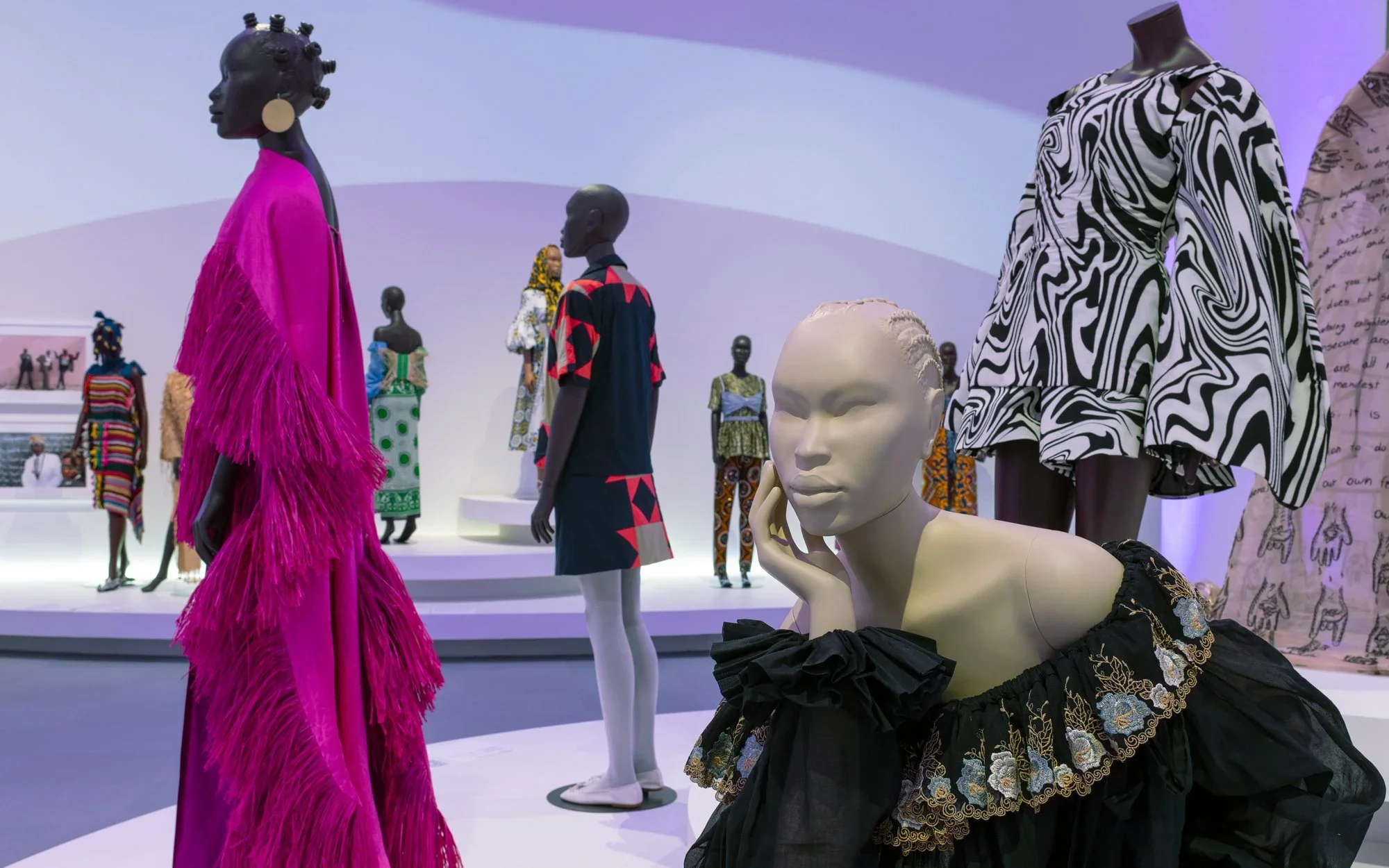
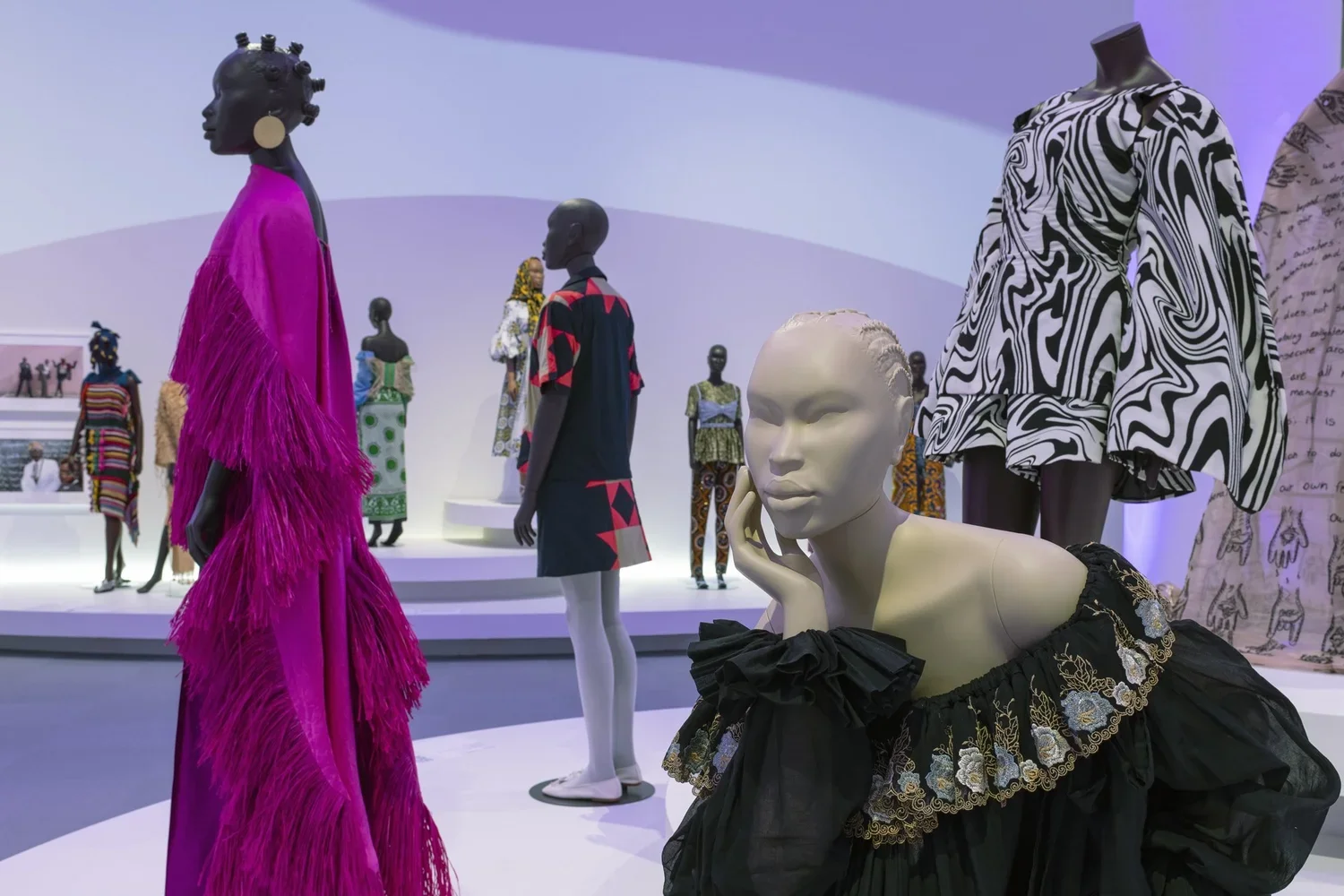
Africa Fashion at London’s V&A Museum (June 22-April 23) was hailed as the most important survey of fashion from the African continent to date. Nataal was proud to work closely with its curator, Dr. Christine Checinska, to develop the film ‘Who Dey Shake’ by Lakin Ogunbanwo, which featured as part of the exhibition’s invigorating exploration of Africa’s radical style and culture from the vanguard names of the 1950s and 60s through to today’s new generation of multi-hyphenate creators. And now, as the show opens at Brooklyn Museum (where Nataal is a media partner and is exhibited in the publications section), it has blossomed once more in the caring hands of Ernestine White-Mifetu, Sills Foundation Curator of African Art, and Annissa Malvoisin, Postdoctoral Fellow in the Arts of Africa at the Bard Graduate Center. Together they are responsible for reimaging the museum’s African galleries with important exhibitions such as this.
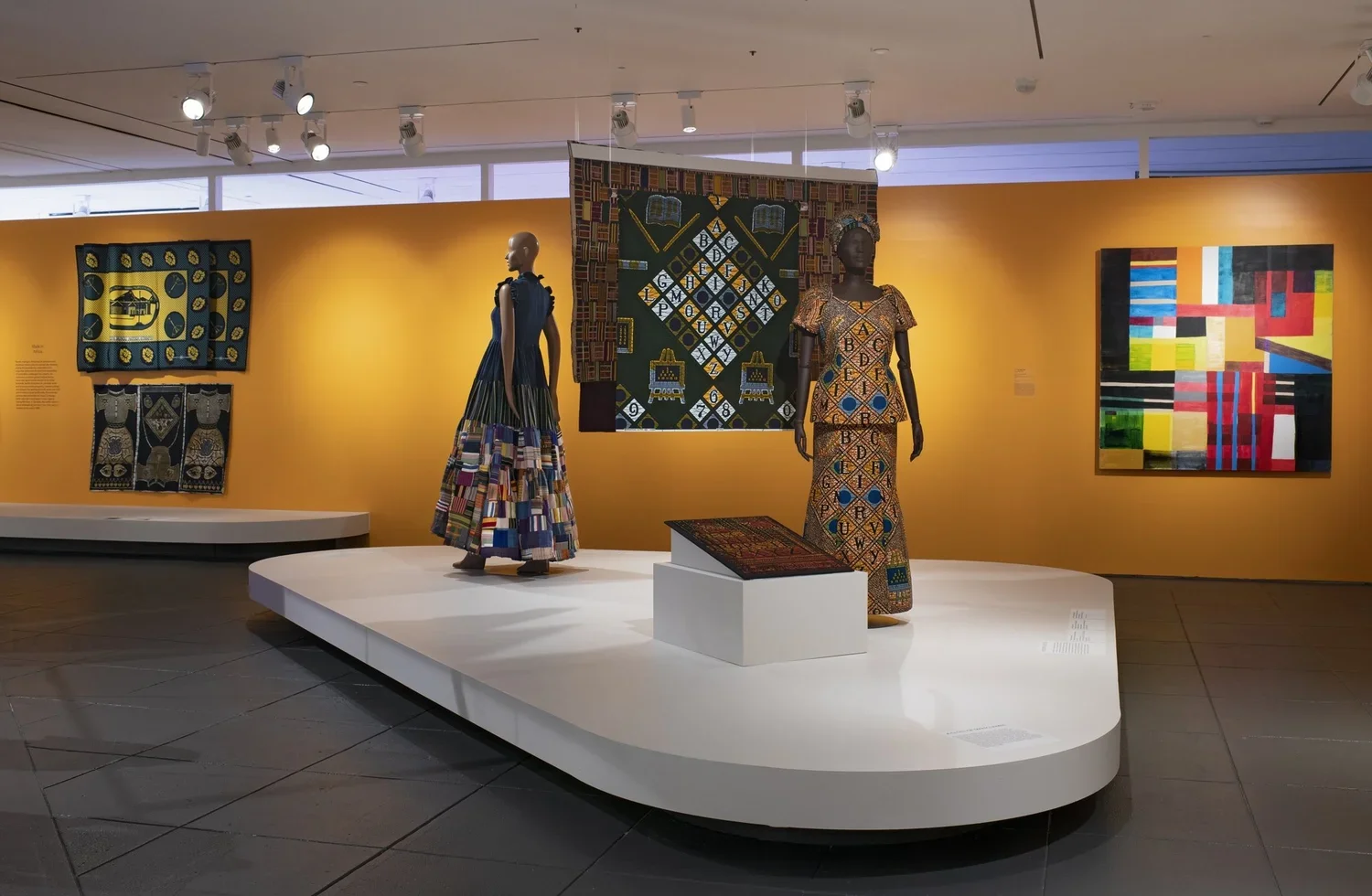
“When we first engaged with the show at the V&A, we were inspired by the fact it was such a monumental survey on African fashion and culture as a whole. Something like this has never been shown in the US so we wanted to build upon that by localising it in New York,” explains Malvoisin. “We’ve incorporating a lot of Brooklyn Museum’s Arts of Africa collection, especially our rich textiles. We’ve expanded on the existing themes to make sure the community here is connected to the exhibition. And we’ve focussed on acquisitions that have allowed us to work with local designers, photographers and visual artists.”
-
![]()
Africa Fashion, Brooklyn Museum. Photo Danny Perez
-
![]()
Africa Fashion, Brooklyn Museum. Photo Danny Perez
-
![]()
Africa Fashion, Brooklyn Museum. Photo Danny Perez
-
![]()
Africa Fashion, Brooklyn Museum. Photo Danny Perez
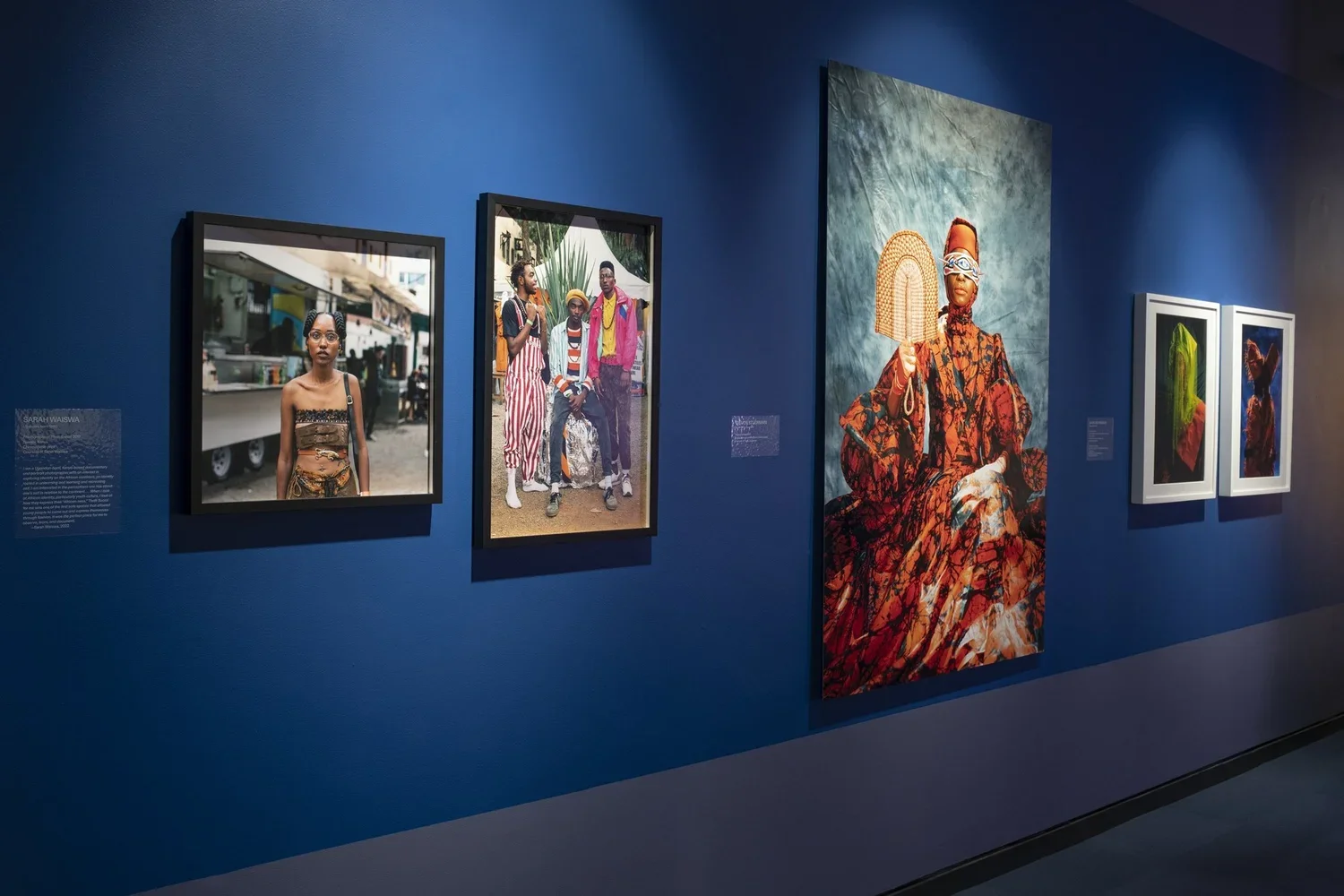
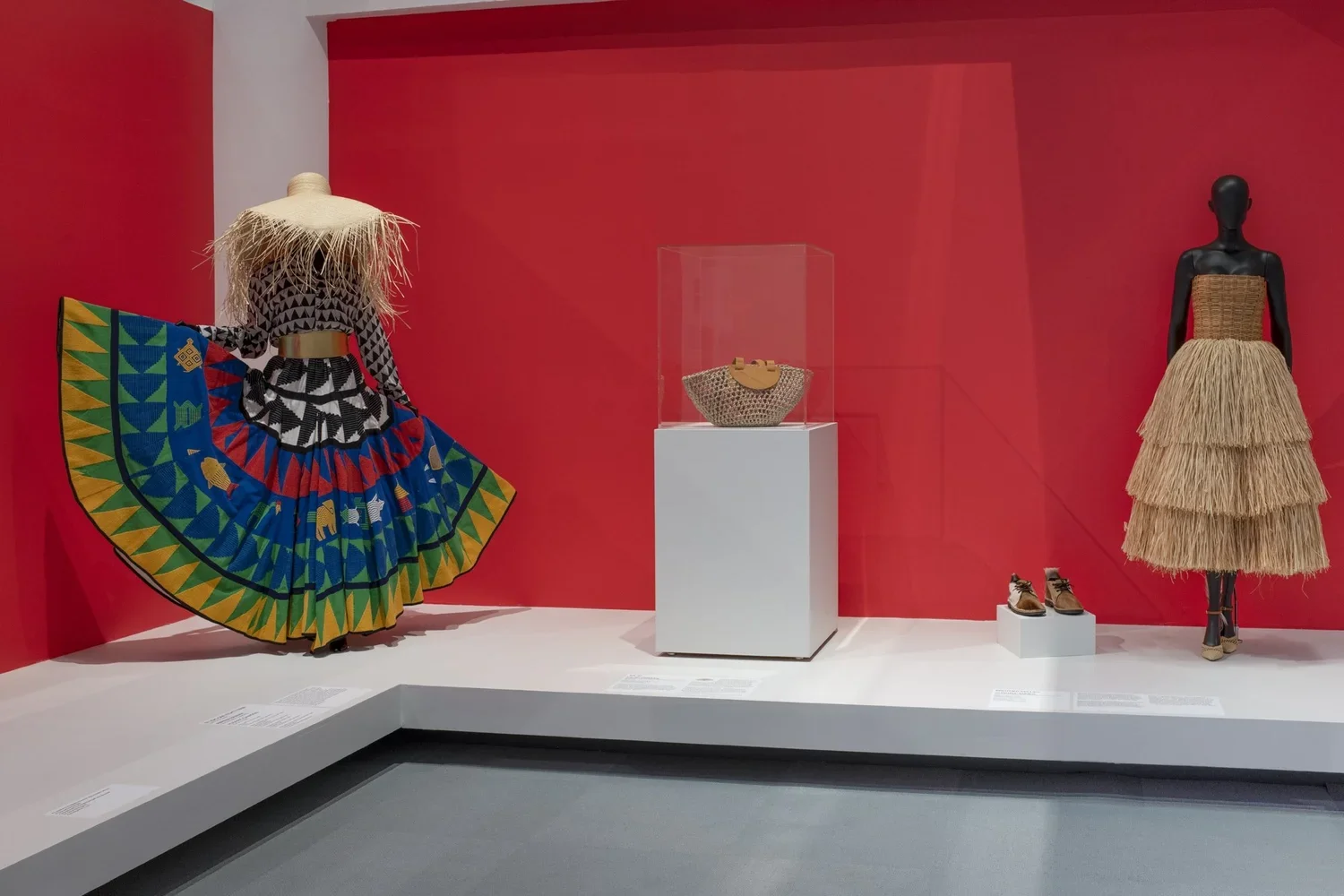
Of their approach, White-Mifetu adds: “Christine told us that for her, it was crucial that the designers had their own voice to choose how they were represented. This is very much in line with our ethos. It’s about working collaboratively with creatives and presenting the lived realities of the communities on this side of the world who have a foot on the continent, whether they were born there or engage with the materiality and processes.”
The show encompasses over 180 works situating the looks and objects from the original show, which were predominantly drawn from the continent, in amongst pieces from voices in the US spanning fashion, music, literature, photography and visual art. For example, some archival commemorative cloths sit alongside a dress by New York-based Nigerian designer Lola Faturoti that marks President Obama’s inauguration. Elsewhere a Ndebele marriage blanket, traditionally beaded by a bride over the lifetime of her marriage, is in conversation a film by contemporary Ghanaian artist Godfried Donkor, which considers the significance of textiles for his mother, for whom as a trader they were a way to assert agency and power.
Kwame Brathwaite, Untitled (Model Who Embraced Natural Hairstyles at AJASS Photoshoot), 1970
Hassan Hajjaj, Draganov, 2021
Malvoisin explains that music plays an important role in layering their curation with the addition of three soundtracked listening zones. “At the beginning we’re focussing on the independence era, so we hear Fela Kuti and Miriam Makeba. There’s juju and high life. Then you move into the end of the 20th century with Algerian and Moroccan rai music. And you end up in the now of Global Africa with Burna Boy and Tiwa Savage, with amapiano and afro pop. All of this really brings you into the experience at different entry points.”
In terms of new film and photography, existing artists such as Daniel Obasi, Sarah Waiswa and Stephen Tayo are joined by Hassan Hajjaj with his much-hailed ‘My Rock Stars’ series and Victoire Douniama’s portraits of female sapeurs, plus works by Trevor Stuurman, Omar Victor Diop and Athi-Patra Ruga. These hang alongside iconic images from J.D. ‘Okhai Ojeikere, Marilyn Nance, Kwame Brathwaite and Sanlé Sory, which illustrate how today’s visual artists stand on the shoulders of their predecessors by continuing their celebration of graceful self-styling as an assertion of joy and identity.
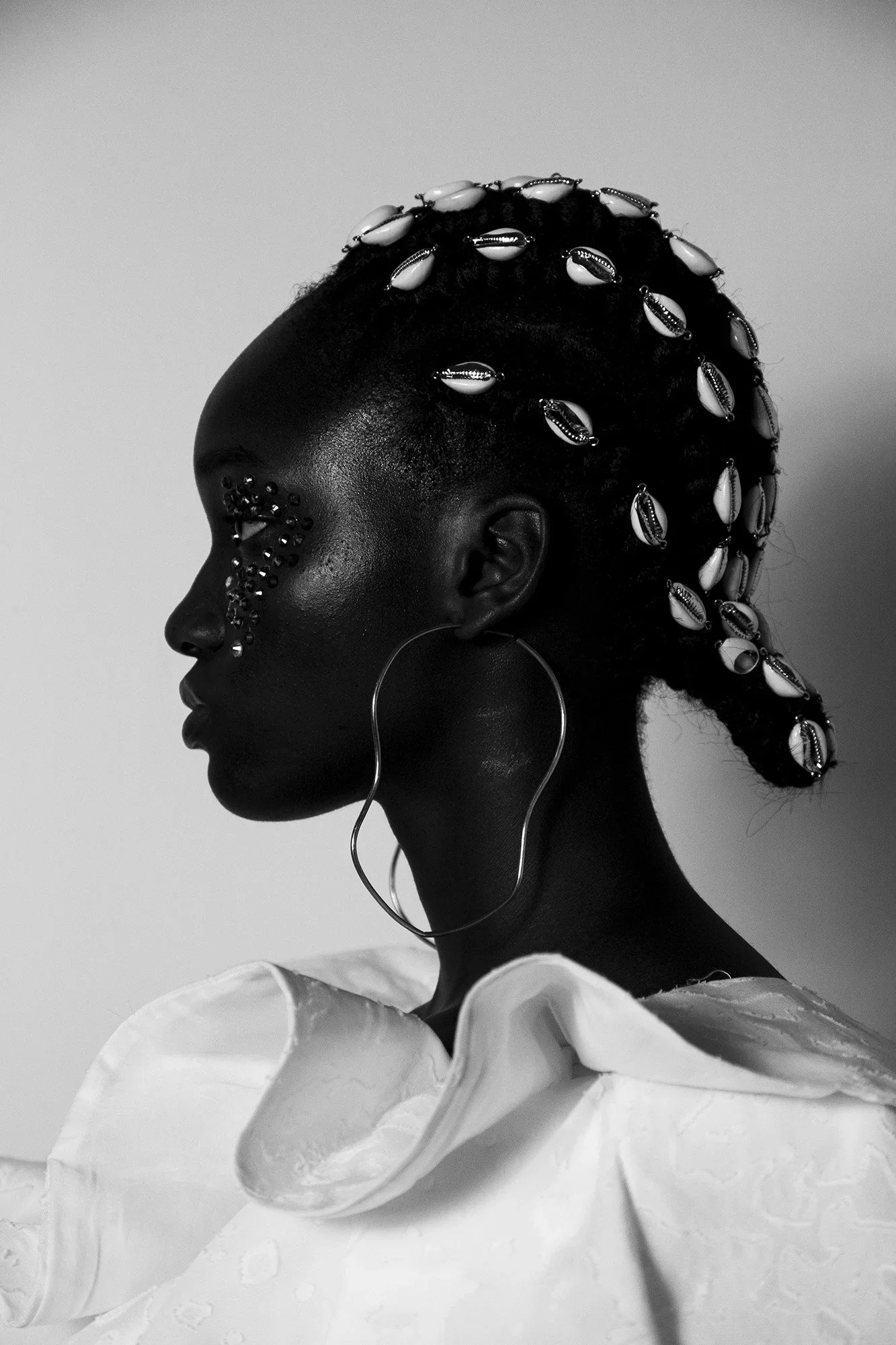
Trevor Stuurman, Tongoro Beauty 3, 2022
+J. D. 'Okhai Ojeikere, Modern Suku, 1974
Malvoisin explains that music plays an important role in layering their curation with the addition of three soundtracked listening zones. “At the beginning we’re focussing on the independence era, so we hear Fela Kuti and Miriam Makeba. There’s juju and high life. Then you move into the end of the 20th century with Algerian and Moroccan rai music. And you end up in the now of Global Africa with Burna Boy and Tiwa Savage, with amapiano and afro pop. All of this really brings you into the experience at different entry points.”
In terms of new film and photography, existing artists such as Daniel Obasi, Sarah Waiswa and Stephen Tayo are joined by Hassan Hajjaj with his much-hailed ‘My Rock Stars’ series and Victoire Douniama’s portraits of female sapeurs, plus works by Trevor Stuurman, Omar Victor Diop and Athi-Patra Ruga. These hang alongside iconic images from J.D. ‘Okhai Ojeikere, Marilyn Nance, Kwame Brathwaite and Sanlé Sory, which illustrate how today’s visual artists stand on the shoulders of their predecessors by continuing their celebration of graceful self-styling as an assertion of joy and identity.
“Such a monumental survey on African fashion and culture has never been shown in the US before so we wanted to build upon that by localising it in New York”
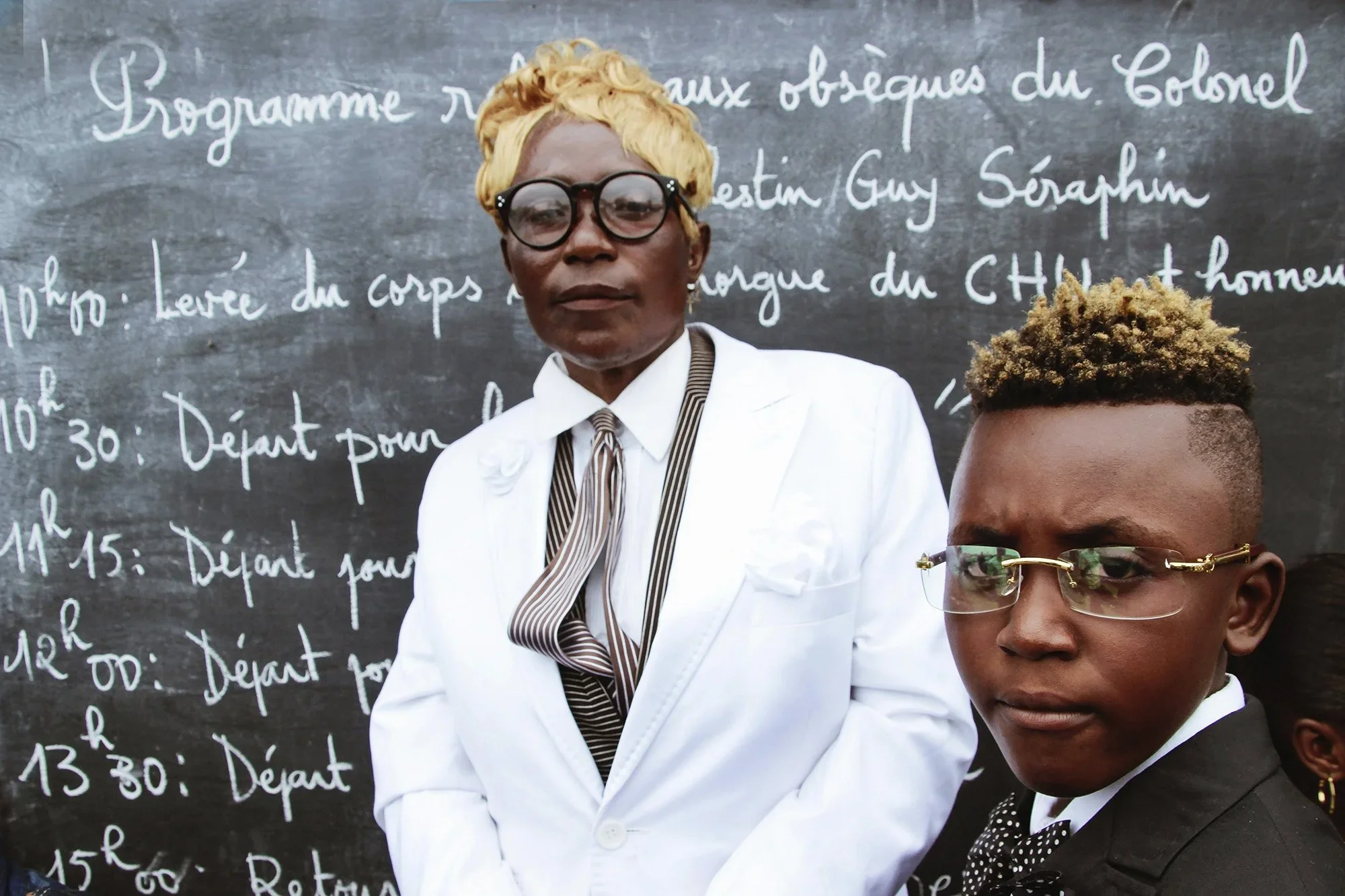
Victoire Douniama, La Sape du Congo, 2018
Read our overview of the V&A show here
Watch ‘Who Dey Shake’ by Lakin Ogunbanwo and Nataal here
Visit Brooklyn Museum
Words Helen Jennings
Published on June 26, 2023
Explore more stories
New York
Thom Browne
São Luiz do Paraitinga
Thom Browne
Black style icons
Balmain
Creative DNA
British Council
Nataal is a media brand and creative studio dedicated to diverse storytelling around Africa and beyond
© Nataal 2026.