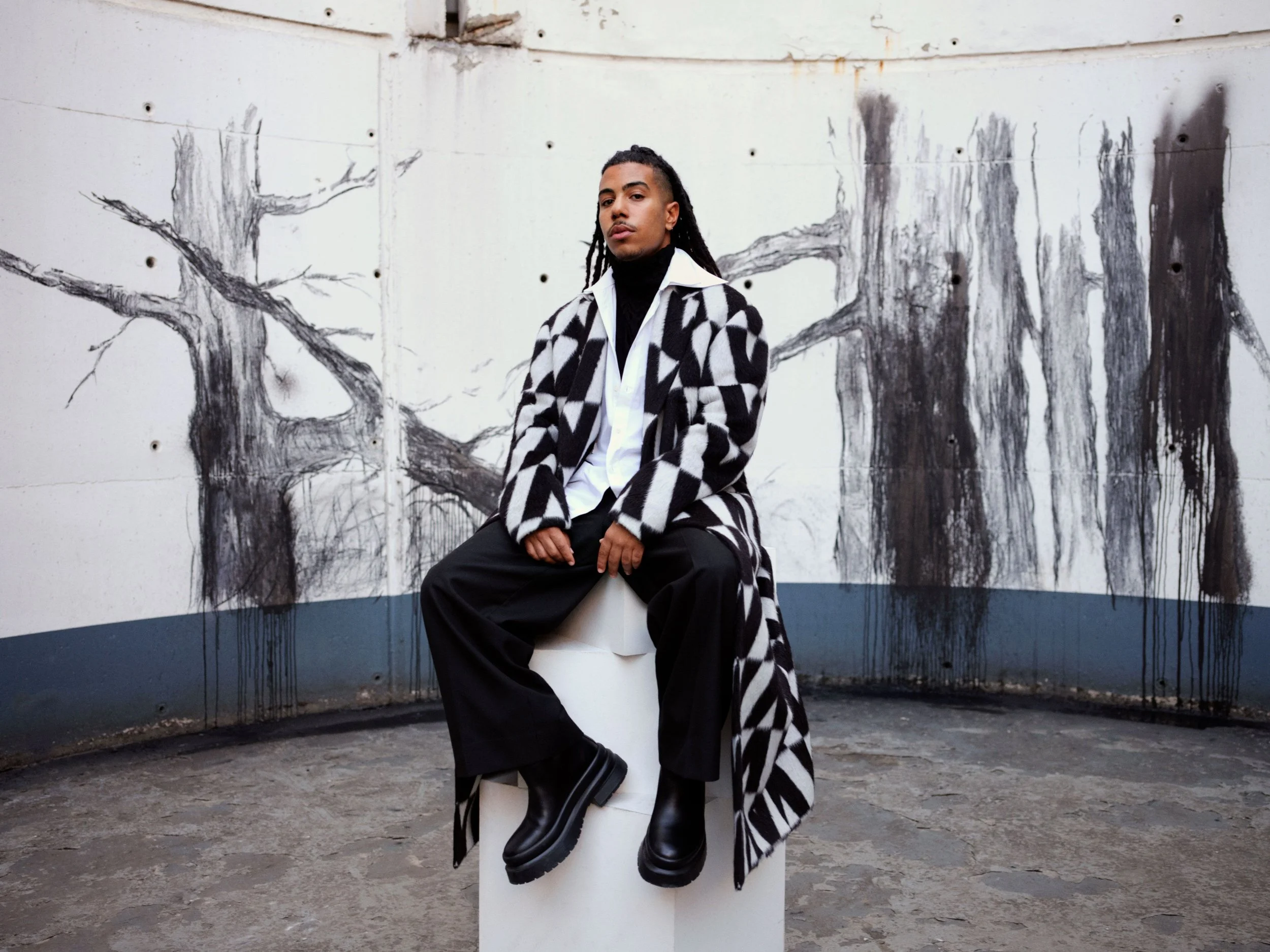


Collage artwork
Aadam Sheikh
Words
Miriam Bouteba
Introducing the queer Palestinian brand that’s disrupting more than one narrative
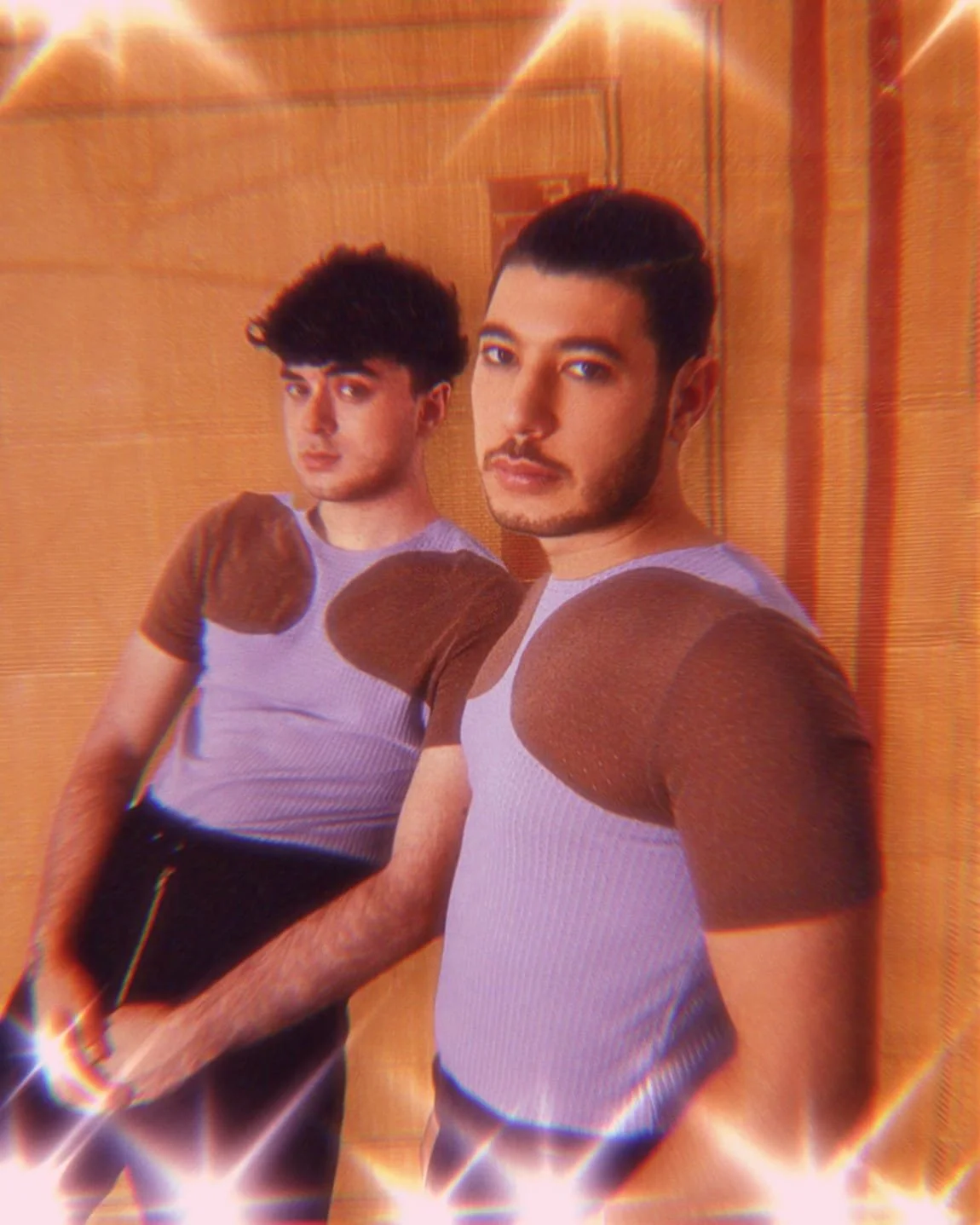
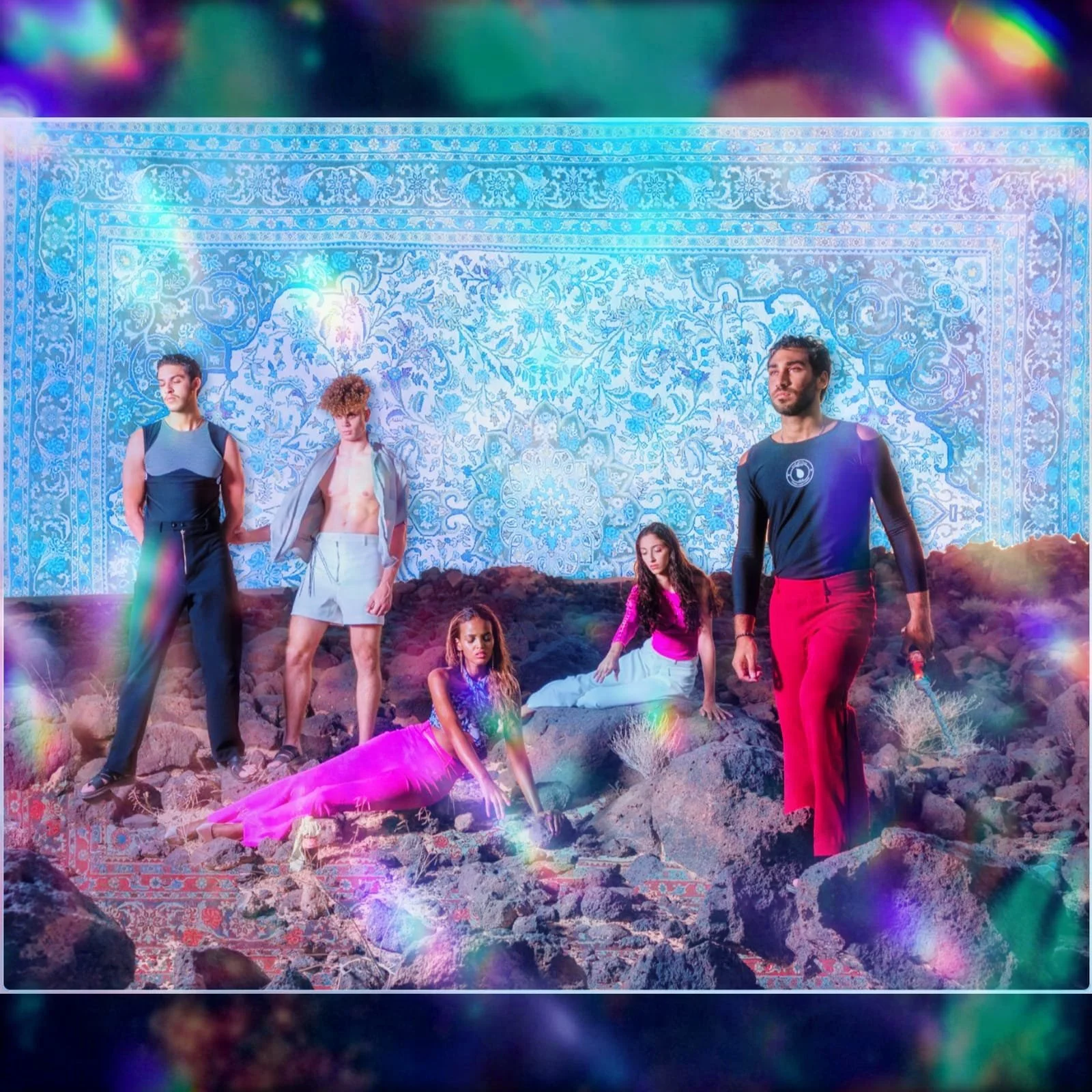
“A land without people for a people without land” — that was the zionist falsehood used to help found the state of Israel, or Occupied 48 as it’s otherwise known. Since the Nakba, which began in 1948, this propaganda has been propagated as Palestinian lives are erased, both literally and culturally, by settler colonial forces and their government. This is one of the reasons why Trashy Clothing is so vital. Existing, loudly and proudly, with a kaleidoscopic aesthetic that’s dripping in kitsch, it exists as a powerful rebuttal - a living, breathing, oh-so vibrant example of both Palestinian and Arab identities. The brainchild of Shukri Lawrence, born and raised in Jerusalem, Palestine, and Omar Braika, a Palestinian refugee born and raised in Amman, Jordan, the label is based between the two countries, with Braika unable to visit Palestine due to his refugee status. Since 2018, the duo has released seven erudite collections, all which have been produced locally as well as being shot and modelled by Middle Eastern talent. We spoke to them about the importance of community and how Trashy Clothing is upending all kinds of stereotypes.
Visit Trashy Clothing
Miriam Bouteba in conversation with Trashy Collective
Can you tell us about your name?
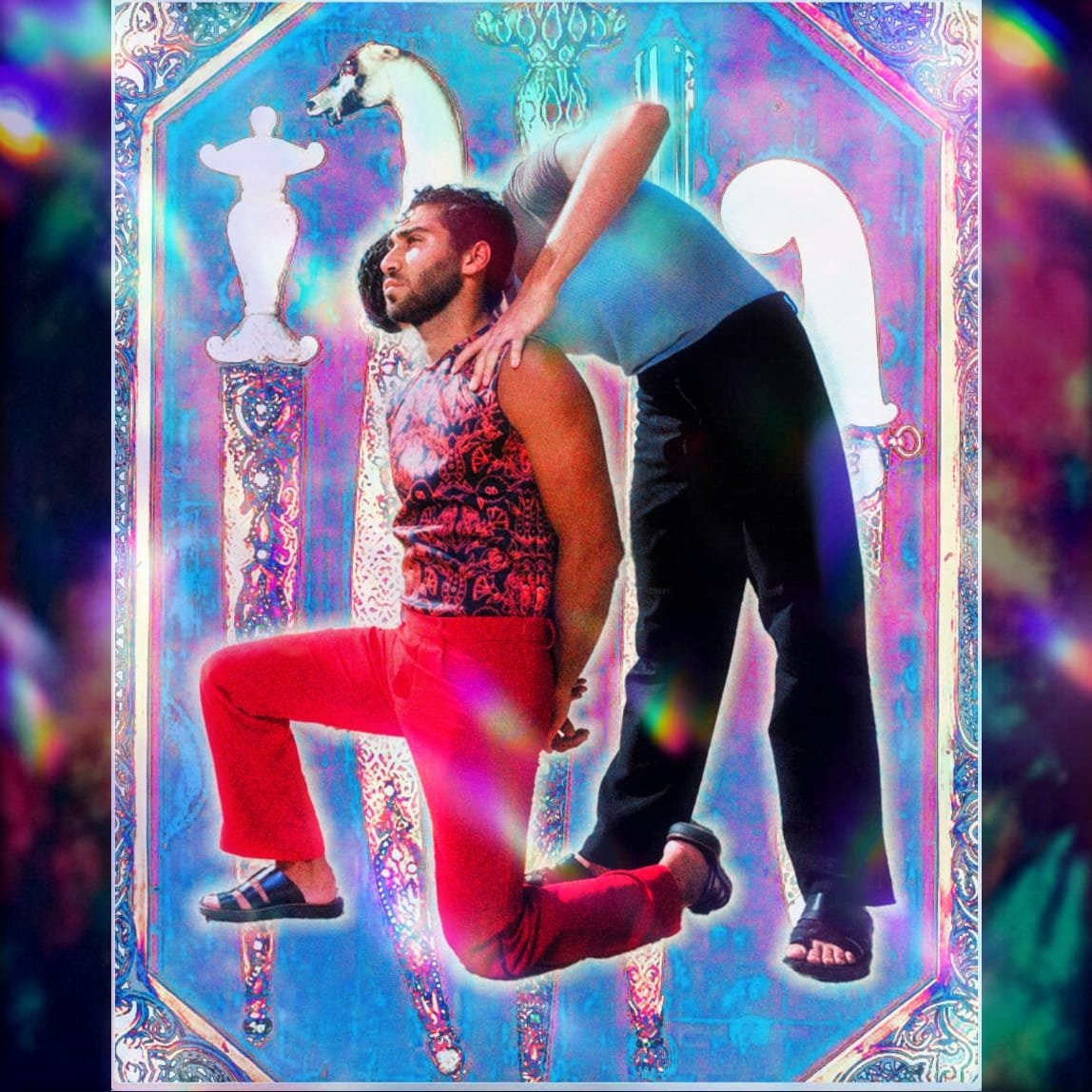
The name is inspired by kitschy store names like 'Glam Lady' or 'Elegant Fashion' that are spread around different cities in the Arab region. It questions the fantasised beauty and luxury ideals in mainstream fashion, and ridicules capitalism and consumption; a luxury label named Trashy Clothing.
How would you define ‘trashiness’?
It is authentic, real, camp, careless, kitsch, and a creative overflow. It is contradicting and insightful. Our ethos is to believe fashion’s standards never existed. This pushes us to think outside of those rules. By bringing ‘otherness’ to high fashion while masked behind a satirical aesthetic, we're able to raise awareness of topics rarely discussed - a Trojan Horse effect.
How do you use kitsch to disrupt the narrative?
The elite can run the world in ways that are off-limits to their subjects but this hasn’t stopped those who societies seek to snuff out from ultimately becoming the makers of taste. As kitsch and 'bad taste' are part of our everyday life in the Middle East, it is important to respect and highlight it. The dominance of taste is a constant grapple between those who produce and those who would dictate the market of consumption. By creating juxtaposition with the aesthetics of different classes, mixing colours and fabrics, challenging gender performances, and radically bridging high and low culture, the contradictions of globalisation, class and gender are manifested in our label.
What is your creative process?
It depends on the collection, but when possible, we like to put ourselves in the locations that the collections reference. To live through it and consume as much from it as possible. Living in the Middle East we’re always finding inspiration around us, it could be the people in the streets or the architecture, even the music we hear all around. It’s our IRL moodboard. Watching films and music videos together is also important, as there’s always a common feeling we create that generates so much magic. We then sketch designs together, expanding on each piece. Having two perspectives is better than one because we can learn from each other’s experiences.
Which other designers inspire you?
Hushidar Mortezaie is an icon. His political cultural approach to fashion is so clever and gorgeously executed. We’re honoured to have collaborated on our AW20 collection with him.
This issue is about community and togetherness - how does the brand respond to those ideas?
We think collaborations are important when working on proper representation of our communities. To truly represent the SWANA region, we need to have all of its perspectives. This is why we frequently work on pieces or collections with different designers from the region. And last year we opened the Instagram account @trashy_files where we share our moodboards and references from Arab pop culture. It grew so much to the point where we would get submissions from our followers that are gold! In a way, our community is adding to our archives that we conceptualise from, which is beautiful.
You also founded Cyber Fashion Week last year?
Cyber Fashion Week is an international, sustainable and accessible digital fashion week combining the crossroads and intersections of fashion, music, photography, art and performance. We hosted over 80 creatives from around the world, introducing a new way to present collections sustainably. With an all-digital presentation, we were able to suggest a new accessible concept to the fashion industry that transcends passports and visas, reduces waste and limits our carbon footprint.
How have you been able to grow a community in the middle of the ongoing nakba?
In the past two months, we’ve witnessed so much solidarity. Palestinians that have been geographically separated, united and resisted whichever way they were able to, which gave us so much hope. Everyone has put their differences aside and fought the same fight because at the end of the day we are all going through the same struggle.
How important is queerness to your work?
As queer designers, we rely on storytelling when designing, especially our own stories as queer Palestinians. It’s important to showcase how we fight for both our liberation and our rights as queer and Palestinian because the occupation uses both our identities against us to pinkwash and boost its tourism.
The Palestinian struggle can be seen as analogous to the fight for independence in Algeria and that against Apartheid in South Africa. Do you feel kinship with these people?
Definitely! Both liberations taught us so many lessons and ways to fight for ours. They showed us that liberation is possible and that there’s always hope.
And how would you like people to express solidarity?
By having conversations with family and friends, amplifying Palestinian voices, supporting Palestinian artists and businesses, or even reposting updates in Palestine. Solidarity to Palestinians can come in so many different ways, for us the most important thing is to recognise us. As our existence is resistance.
What does the future hold for Trashy Clothing?
We’re currently preparing for our upcoming AW21 collection which will be an online runway show. We are also planning on beginning to stock our collections in stores internationally. As the message of Trashy expands, we hope to have people become aware of the Palestinian struggle from an experience-based satirical approach.
“Our existence is resistance”